
Step up your game when talking to your next contractor/architect and make sure they are keeping your home safe with the correct insulation products they are hiding behind your walls!
Spray foam insulation is created by combining two components: A-side (isocyanate) and B-side (polyol resin). These are pumped from barrels through a Graco Reactor, where they are heated and pressurized, then carried through hoses into the building. Inside, they meet in a spray foam gun’s mixing chamber, spraying onto surfaces where they bond and expand instantly. Within seconds, the material cures, forming a seamless, durable insulation layer that offers unmatched air sealing compared to traditional options.
There are two types of spray foam: open cell and closed cell. Both are air impermeable but serve different needs. Open cell is lighter, offer sound control, and is ideal for new construction with a vapor barrier in cold climates. Closed cell is denser, adds structural strength, and resists water intrusion, making it ideal for below-grade areas, concrete, and metal. Both options deliver superior energy efficiency, durability, and long-term savings for homeowners and builders.
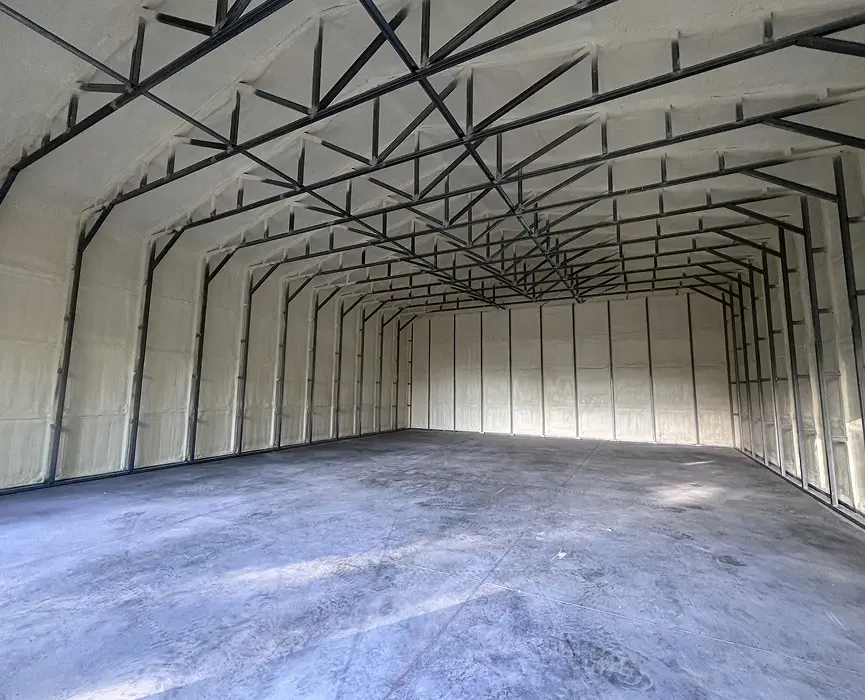
Closed cell spray foam delivers an outstanding R-value of 7.4 per inch, providing some of the highest insulating performance available today. This exceptional thermal resistance means less energy loss, leading to lower heating and cooling costs.
With just a 1-inch application, closed cell foam acts as a vapor barrier, preventing moisture intrusion and protecting the structure from mold and water damage. This built-in resistance makes it ideal for high-humidity environments.
Closed cell spray foam is a dense 2 lb foam, adding significant structural integrity to walls, ceilings, and roofs. Its toughness enhances building longevity by reinforcing surfaces and withstanding physical stress over time.
It is completely air impermeable, closed cell foam helps to block dust, allergens, and outdoor pollutants from entering the home. This results in cleaner, healthier indoor air and better comfort for occupants.
Closed cell foam easily fills cracks, gaps, and hard-to-reach areas, ensuring complete coverage even on the most complex surfaces. Its strong bonding ability makes it the top choice for steel, metal, stone, and concrete applications.
Open cell spray foam is incredibly flexible and expansive, allowing it to fill every crack, gap, and tight space with ease. Its softer structure ensures a complete, snug fit around intricate framing, wiring, hvac, and plumbing.
Due to its open-cell structure, it greatly reduces sound transmission from room to room and helps block outside noise. This makes it ideal for creating quieter, more comfortable indoor environments.
Provides three times the yield from a single barrel compared to closed cell foam, making it a cost-effective insulation option. It’s perfect for projects where budget is a priority without sacrificing performance.
Controlled vapor diffusion, helping walls to "breathe" with a 5" application while still maintaining excellent air sealing. This makes it a smart choice for managing moisture in walls without trapping it, especially in mixed climate zones.
Open-cell spray foam insulation is typically made with water as a blowing agent, rather than chemicals that can be harmful to the environment. It also has a lower carbon footprint than other types of insulation, making it a more environmentally friendly option
A common misconception is that spray foam insulation will make a home or building “too tight,” but studies and infrared imaging show that homes naturally breathe through everyday activities. Opening doors, garage doors, windows, and other simple movements create substantial air exchange in just milliseconds. Spray foam’s purpose is to control unwanted air leaks that waste energy—not to prevent healthy airflow. By sealing properly, we improve indoor air quality, keeping out dust, allergens, and pollutants, while still allowing the home to “breathe” in a healthier, more controlled way.
In spaces like bathrooms and laundry rooms, where moisture rises from showers or appliances, we recommend installing an ERV (Energy Recovery Ventilation) system. ERVs bring in fresh air, control humidity, and maintain energy efficiency. With spray foam, we don’t vent roof systems because the goal is to control the stack effect, helping to maintain consistent temperatures throughout the building. By setting your home’s temperature at a specific level, spray foam ensures it stays there with minimal strain on utilities, reducing energy consumption and saving you money in the long run.
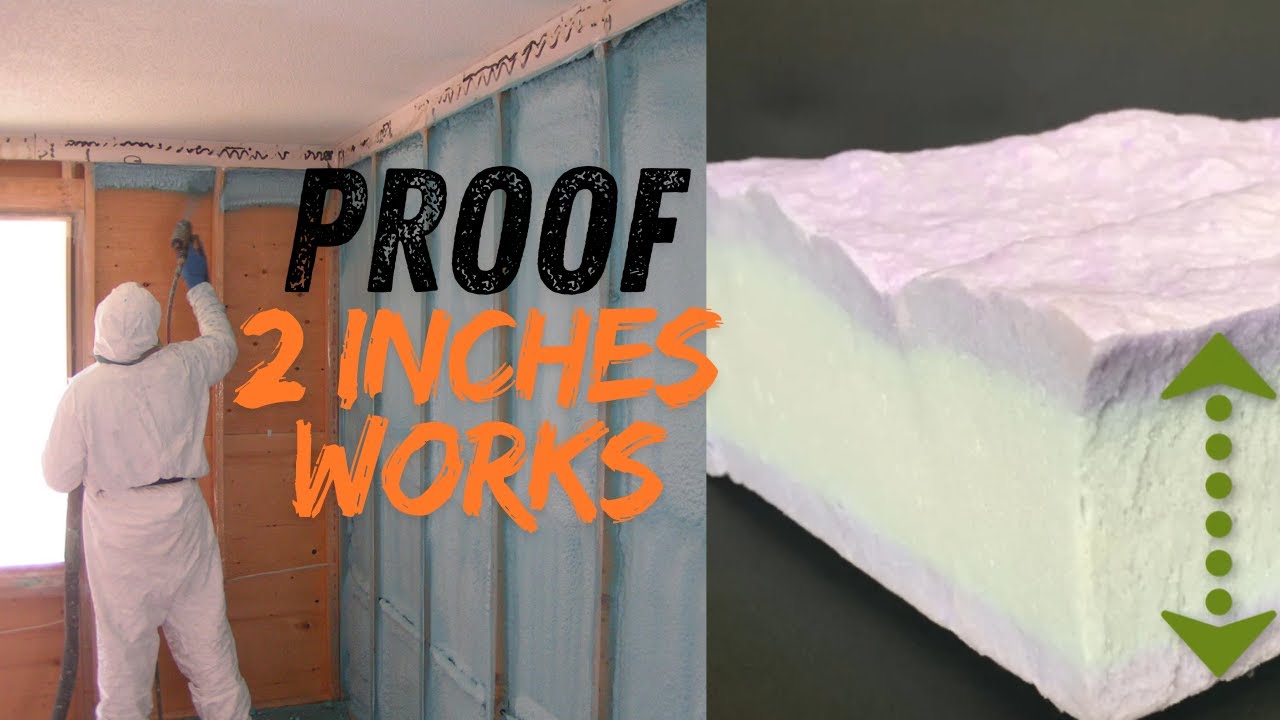


Closed cell spray foam offers an impressive R-value of 7.4 per inch, while open cell spray foam provides a strong 4.45 R-value per inch—both among the highest in the industry. We exclusively work with Huntsman Building Solutions, ensuring our clients receive the best-performing, most reliable foam available. The thermal performance of both products has been rigorously tested, with retention tests showing that they continue to deliver superior insulation value over time. These high R-values not only provide excellent thermal resistance, but they also play a crucial role in maintaining consistent temperatures, reducing energy costs, and ensuring long-term energy efficiency.
Simply Yes. Spray foam is air impermeable, meaning it keeps the heat and cool air inside your home, reducing the need for constantly running utilities. In contrast, products like cellulose, fiberglass, and thermal fibers don’t stop air from passing through; they only slow the rate at which heat or cool air escapes. When viewed through an infrared camera, homes insulated with spray foam show heat retention, while other insulation types allow warmth to pour out, reducing efficiency.
If you’re working with limited space, such as a 2×4 exterior wall, 2×8 roof system, or even a 2×12 cathedral roof system, and you can’t meet code with open cell or traditional insulation, closed cell spray foam is your best option. With its impressive R-value of 7.4 per inch, closed cell foam allows you to meet code requirements in these compromised spaces, providing superior thermal performance even with limited depth.
Yes, both our open cell and closed cell spray foam products are mold and fungi resistant, as stated in the TDS (Technical Data Sheets) provided by the manufacturer. These products have been specifically designed to prevent mold growth, ensuring a healthier indoor environment by resisting moisture and organic material that can lead to mold issues.
Absolutely. While products like cellulose and fiberglass typically have a life expectancy of 20-30 years before you start to see decay or shifting, our spray foam products come with a lifetime guarantee provided by the manufacturer, Huntsman Building Solutions. This ensures long-term performance, stability, and continued effectiveness throughout the life of your home.
Yes, both of the spray foam products we carry are GreenGuard Gold Certified, meeting some of the most stringent environmental standards, which allows them to be safely installed in sensitive environments like schools and hospitals. Additionally, these products are made with renewable and recyclable elements, including materials like recycled plastic bottles and soybeans, making them a more sustainable choice for your insulation needs.
No, spray foam is not flammable. Thanks to its zero air permeability, once oxygen is burned off in a fire, the foam will smolder and often self-extinguish. Additionally, we provide thermal and ignition barriers, such as DC-315 and No Burn, to be applied to spray foam in areas where it’s left exposed and not covered by drywall, further enhancing fire safety.
Yes, open cell spray foam is particularly effective at reducing noise transmission. It acts as a sound barrier, absorbing sound and minimizing the amount of noise that travels between rooms or from the outside, creating a quieter and more comfortable living environment.
Seals and insulates in one application
Meets or exceeds residential energy codes
Reduce building materials and jobsite waste
Easily installs to irregular shapes and curves
Backed by our limited lifetime warranty
Thermal comfort and consistent temperatures
Minimizes dust and allergens from entering the home
Reduces unwanted outdoor noise pollution
Vapor and moisture barrier in one application
Effective barrier to harmful soil gases
Improves structural and racking strength
Increases wind uplift resistance
Resists flood damage
Creates an exterior monolithic barrier

Head Quarters: Super 50 Way Ballston Spa, NY 12020
Saratoga, NY Office: (518)-932-2989
Kingston, NY Office: (845)-328-3825
Great Barrington, MA Office: (413)-359-6740
© 2026 The Foam Guy & Son LLC. All rights reserved